
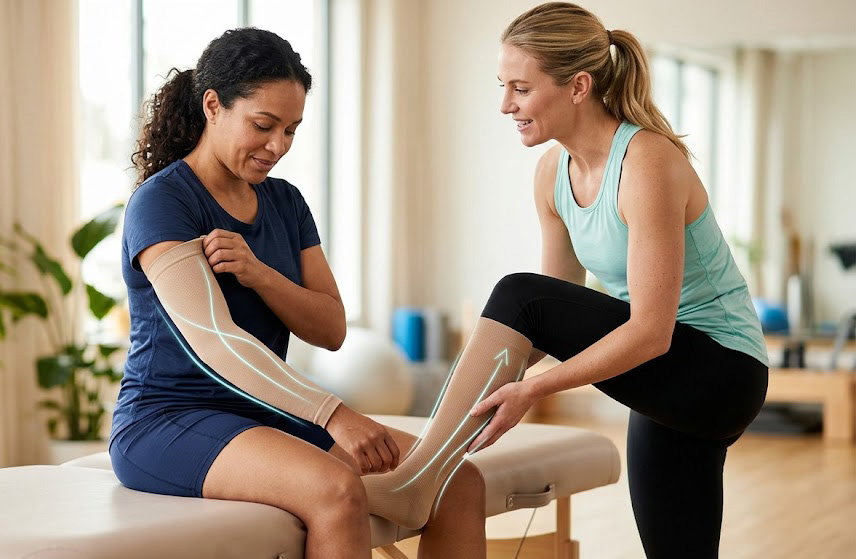
If you often feel bloated, swollen, or heavy, your lymphatic system may not be moving fluid as efficiently as it should. While lymphatic drainage massage is widely known for helping with this, compression garments are another tool that can support the process in a quieter but effective way.
So, do compression garments for lymphatic drainage actually work? The short answer is yes. When used correctly, and especially when combined with professional lymphatic drainage massage, they can help support fluid movement and improve overall results. Here is how and why they make a difference.
What Is Lymphatic Drainage and Why Does It Matter?
Your lymphatic system is your body’s natural waste removal network. It moves a clear fluid called lymph through vessels and nodes, carrying away toxins, excess fluid, and cellular waste while supporting your immune system.
Unlike your blood, lymph has no pump. It relies on muscle movement, breathing, and external stimulation to keep flowing. When that flow slows down, fluid pools, swelling appears, and your body feels heavy and sluggish.
This is exactly where Lymphatic Drainage Massage steps in. This is so gentle, rhythmic pressure that wakes the system up and gets things moving again. The benefits go beyond detox: reduced swelling, stronger immunity, better skin clarity, and a noticeable drop in lymphatic drainage for bloating.
What Are Compression Garments for Lymphatic Drainage?
Compression garments are medical-grade pressure wear designed to apply controlled, graduated pressure to specific parts of the body. Think sleeves, leggings, socks, and full-body suits, all engineered with one goal: keep lymph fluid moving in the right direction.
Here’s the science behind “graduated compression”: the pressure is tightest at the furthest point from your heart (like your ankle) and gradually loosens as it moves up. This pressure gradient pushes fluid back toward the heart, mimicking what your lymphatic system does naturally.
Clinical research backs this up. Compression therapy is a recognized component of Complete Decongestive Therapy (CDT), the gold standard for managing lymphedema and post-surgical swelling.
How Compression Garments Improve Lymphatic Drainage?
Stimulate Lymph Flow
External pressure acts like a manual nudge for sluggish lymph fluid. The garment squeezes, fluid moves, and the system stays active even when you’re sitting still.
Reduce Swelling and Fluid Retention
By preventing fluid from pooling in tissues, compression keeps puffiness at bay, particularly in the legs, arms, and abdomen.
Support Circulation and Recovery
Compression works hand-in-hand with movement. Walking, stretching, and even standing, every motion paired with compression amplifies circulation and speeds recovery.
Maintain Results After Massage
Here’s what most articles skip: compression is the secret to making your massage results last. After a session, your lymphatic system is wide open and actively flushing. Wearing a garment locks in that progress, preventing fluid from creeping back and keeping your body sculpted, light, and de-puffed for longer. Pairing compression with proper hydration and the right foods can improve recovery even more—here’s a guide on what to eat after a lymphatic drainage massage.
What Are The Types of Lymphatic Drainage Garments?
| Garment type | Best for | Key benefit |
| Best lymphatic drainage leggings | Legs, thighs, hips | Reduces swelling, smooths cellulite appearance |
| Lymphatic drainage sleeve | Arms, post-mastectomy recovery | Manages arm lymphedema |
| Compression socks for lymphatic drainage | Calves, ankles, feet | Prevents travel swelling, supports circulation |
| Full-body garments | Post-surgical recovery (liposuction, BBL) | All-over fluid control |
Compression Garments vs Lymphatic Drainage Massage
| Feature | Compression Garments | Lymphatic Drainage Massage |
| Method | Passive pressure | Manual stimulation |
| Results | Gradual | Immediate |
| Best For | Maintenance | Active detox |
| Frequency | Daily wear | Weekly sessions |
Key insight: The lymphatic system doesn’t have its own pump; it relies on movement and external stimulation to function efficiently. That’s why combining active massage with passive compression delivers more effective, longer-lasting results.
When Should You Use Compression Garments?
Compression garments play an important role in supporting circulation and helping your body manage fluid more effectively in everyday situations:
- After surgery, they support healing tissues and help reduce swelling by encouraging proper fluid movement.
- After a massage, especially lymphatic drainage, they help maintain the results of your session by limiting fluid from building up again.
- During travel: Sitting for long periods can slow circulation. Compression helps reduce swelling and keeps your legs feeling more comfortable.
- For swelling or water retention: They provide consistent pressure that helps control fluid buildup and improve overall comfort.
How do you Choose the Right Compression Garment?
Choosing the right compression garment is less about picking the tightest option and more about finding what your body actually needs:
- Compression level: Measured in mmHg, this determines how much pressure the garment applies. Lower levels are suitable for everyday support, while higher levels are usually recommended after surgery or for medical conditions.
- Fit: A proper fit is essential. The garment should feel snug but not restrictive. If it causes pain, numbness, or leaves deep marks, it is likely too tight.
- Material: Breathable and flexible fabrics are more comfortable for long wear and help prevent skin irritation.
- Area of treatment: Choose a garment designed for the specific part of your body you want to support, whether it is the abdomen, legs, arms, or full body.
Do You Need Compression Garments or Professional Lymphatic Drainage?
Here is the honest answer. Compression garments help support your body, but lymphatic drainage massage NYC is what actually gets things moving. One maintains the results, the other creates them.
If you are looking for visible changes, the best approach is to use both together. At Skylight Beauty Spa, our lymphatic drainage treatments are designed to gently stimulate the lymphatic system, reduce swelling, and support body contouring. When combined with the right aftercare, including compression garments, the results are more noticeable and tend to last longer.
If you are searching for the best lymphatic drainage massage NYC, our therapists focus on what your body needs at the moment. No two sessions feel the same because no two bodies respond the same way. Many clients also notice they feel lighter, less bloated, and more defined after treatment. While lymphatic drainage can reduce fluid retention and body puffiness, many people also wonder whether it affects body weight. If you’re curious, read our detailed guide on whether lymphatic drainage helps with weight loss.
Expert Insight on Lymphatic Drainage and Compression Therapy
Compression therapy is widely used as part of Complete Decongestive Therapy, a clinical approach for managing lymphatic conditions. It works best when paired with manual lymphatic drainage, which helps guide fluid through the body more effectively.
At Skylight Beauty Spa, treatments are built on real experience and practical knowledge. Our therapists combine hands-on techniques with clear aftercare guidance, including how and when to use compression so you can get the most out of every session.
Ready to feel lighter, sculpted, and refreshed? Book your session at Skylight Beauty Spa and experience the difference expert care makes.
FAQs
Do compression garments really help lymphatic drainage?
Yes. Graduated compression encourages lymph fluid to move toward the heart, reducing swelling and supporting natural detox.
How long should you wear them?
Most people wear them 8-12 hours daily, though post-surgical patients may wear them around the clock for several weeks based on professional guidance.
Who should use lymphatic drainage garments?
People who can benefit from lymphatic drainage garments include individuals managing conditions like lymphedema, people who spend long hours sitting or have a less active routine, athletes recovering after intense training sessions, and frequent travelers who often experience swelling during or after flights. These garments help support healthy circulation, reduce swelling, and provide gentle compression where needed.
Are compression garments safe?
Yes, in most cases, they are safe when used properly. The key is choosing the right size and level of compression. Garments that are too tight can restrict circulation, cause discomfort, or lead to numbness. A proper fit always matters more than how tight the garment feels.
Can compression garments replace medical treatment?
No. They support care but don’t replace professional diagnosis or treatment for medical conditions like lymphedema.