
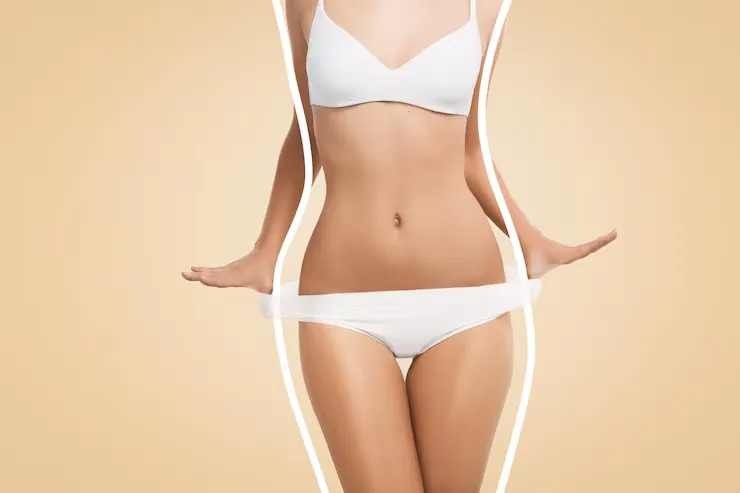
A defined waist does not come from one single thing. Your natural body shape, genetics, bone structure, body fat, muscle development, posture, and skin firmness can all affect how your waist looks. Some people naturally have a smaller waist because of their rib cage, pelvis, and where their body stores fat. Others may have a healthy weight but still notice extra fullness around the stomach or sides.
The good news is that you can sometimes make your waist look more defined without surgery. Healthy eating and regular exercise can help improve overall body composition, while non-surgical body contouring may help with certain localized concerns. However, these treatments are not a replacement for weight loss, and they cannot change your bone structure.
Can You Really Get a Smaller Waist Without Surgery?
Yes, but it depends on what is causing your waist to look less defined.
Losing overall body fat can make the waist smaller, but your body decides where fat comes off first. You cannot choose to burn fat only from your waist. Core exercises can strengthen the muscles around your stomach, but they do not directly remove the fat sitting over those muscles.
Non-surgical body contouring is different. It is designed to improve the shape or appearance of a specific area rather than provide major weight loss. The FDA explains that non-invasive body contouring may change the circumference or shape of an area, but results can vary and may be temporary.
What Determines How Small or Defined Your Waist Looks?
Genetics and Bone Structure
Your natural waist shape is partly determined before you ever start exercising. The width of your rib cage, pelvis, and natural body proportions can affect how narrow or wide your waist looks. This is one reason two people with the same weight can have very different body shapes.
Body Fat Distribution
People store fat in different places. Some carry more around the stomach, while others notice more around the hips, thighs, arms, or back. Even when your weight is healthy, you may have small areas of stubborn fat that affect the shape of your waist.
Muscle Development
Your core muscles help support your stomach, back, hips, and pelvis. Building your core can improve strength, stability, and posture. Training your glutes, back, and shoulders can also create more visual balance around the waist. This can make the waist look more defined, but it does not make your waist bones smaller or physically change your skeleton.
Skin Elasticity
Fat is not always the reason a waist looks less defined. Skin can become less firm with age, weight changes, pregnancy, or natural changes in collagen. Someone may have only a small amount of extra fat but still notice loose-looking skin around the stomach.
5 Ways to Get a More Defined Waist Without Surgery
1. Focus on Overall Fat Loss
If you have excess body fat, gradual overall fat loss can help reduce the amount of fat around your waist. A balanced diet with enough protein, vegetables, fruit, whole grains, and other nutritious foods can support healthy weight management.
Regular movement also matters. Walking, cycling, swimming, jogging, and other activities can help increase calorie use and improve overall fitness. Cleveland Clinic notes that aerobic exercise can help reduce total body fat, including belly fat.
The important point is that you cannot control exactly where your body loses fat. A diet or workout that promises to burn only waist fat is making a claim that the body does not work that way.
2. Strengthen Your Core
A strong core can help you stand and move with better support. Exercises such as planks, dead bugs, bird dogs, and Pallof presses can train different parts of your core.
These exercises should be used to build strength and stability, not as a way to “melt” waist fat. Your abdominal muscles can become stronger even if the layer of fat above them does not change.
3. Build Balanced Muscle Around Your Waist
Your overall body shape is also affected by the muscles around your waist. Strength training for the glutes, hips, back, and shoulders can create more contrast between these areas and the waist.
For example, stronger glutes can improve the shape of the lower body, while stronger back and shoulder muscles can create more balance through the upper body. This can help create a more defined appearance without claiming that exercise can physically change your hip or waist bones.
4. Improve Skin Firmness
If your main concern is loose or less-firm skin, losing more weight may not be the answer. This is where skin-tightening treatments can have a different role.
Radiofrequency, or RF, uses controlled heat to warm tissue and can encourage collagen production. The American Academy of Dermatology explains that non-invasive skin-tightening treatments can produce gradual improvements in firmness, usually with little or no downtime.
5. Consider Non-Surgical Body Contouring
If you are already close to your healthy or stable weight but still have a localized area that bothers you, non-surgical body contouring may be worth discussing with a qualified provider.
These treatments are designed for body shaping rather than major weight loss. The FDA specifically states that non-invasive body contouring does not treat obesity and should not be viewed as a weight-loss procedure.
Non-Surgical Treatments That Can Help Define the Waist
Different treatments are designed for different concerns. A treatment that focuses on localized fat is not necessarily the right choice when loose skin is the main issue.
Body Sculpting
Body Sculpting is a broad term for non-surgical treatments used to improve the shape and appearance of targeted body areas. Depending on the technology used, body sculpting may focus on localized fat, muscle tone, skin firmness, or overall contour.
At Skylight Beauty Spa, our body sculpting services can be used for areas such as the abdomen, waist, flanks, thighs, arms, and other areas where clients want more definition. Our approach is focused on contouring rather than replacing healthy weight-management habits.
RF Skin Tightening
RF Skin Tightening is more focused on skin firmness than on weight loss. Radiofrequency energy heats the deeper layers of the skin, which can encourage collagen production and gradually improve the appearance of loose or less-firm skin.
At Skylight Beauty Spa, we use RF skin tightening as a non-surgical option for areas including the abdomen and other parts of the body where mild skin laxity may affect the overall contour. Our current treatment information explains that results develop gradually as collagen changes over time.
Ultrasonic Cavitation
Ultrasonic Cavitation uses ultrasound energy as part of a non-surgical body-contouring approach. The FDA explains that therapeutic ultrasound can be used to affect fat beneath the skin and may reduce circumference in a treated area, although the technology has risks and results vary.
At Skylight Beauty Spa, Ultrasonic Cavitation NYC is used for localized contouring concerns, including areas such as the abdomen, waist, and flanks. Our treatment page explains that sessions are designed around specific areas rather than overall weight loss.
Which Non-Surgical Treatment Is Best for a More Defined Waist?
There is no single treatment that works best for everyone. The right choice depends on what you are trying to change.
| Main concern | Option to discuss |
| Overall body fat | Nutrition, exercise and healthy weight management |
| Localized fat or body contour | Body Sculpting |
| Less-firm or loose-looking skin | RF Skin Tightening |
| Localized contouring using ultrasound | Ultrasonic Cavitation |
| Major excess skin or dramatic reshaping | Surgical consultation may be more appropriate |
This difference is important because reducing fat and tightening skin are not the same goal. The FDA also notes that non-invasive body contouring results can vary, may be temporary, and may require more than one treatment.
Can You Combine Body Sculpting, RF Skin Tightening and Ultrasonic Cavitation?
Sometimes different treatments may be used as part of a broader body-contouring plan, but combining treatments does not automatically mean better results.
For example, someone concerned about localized fullness may have a different plan from someone whose main concern is loose skin. At Skylight Beauty Spa, we look at the treatment area and the person’s goals before deciding which approach makes sense. Our body sculpting page also explains that treatment plans can be customized based on the area and the type of concern.
How Long Does It Take to See a More Defined Waist?
There is no single timeline for everyone. Lifestyle changes usually happen gradually as body composition changes over time. Non-surgical contouring can also take time, depending on the technology, treatment area, number of sessions, and how your body responds.
Skin tightening is also gradual because collagen changes do not happen overnight. The American Academy of Dermatology notes that non-invasive skin-tightening results generally develop over time.
At Skylight Beauty Spa, we explain expected timelines before treatment because realistic expectations are an important part of good body contouring.
What Won’t Give You a Permanently Smaller Waist?
Waist trainers can temporarily compress the waist while you are wearing them, but they do not permanently remove body fat or change your bone structure.
Doing hundreds of abdominal exercises also will not selectively remove waist fat. Core exercises can make your muscles stronger, but fat loss happens throughout the body rather than only in the muscle you exercise.
Crash diets and detox products are not good long-term solutions either. A more useful approach is to build habits you can continue, then consider targeted cosmetic treatments only when they fit your goals.
Who Is a Good Candidate for Non-Surgical Waist Contouring?
Non-surgical contouring may be considered by someone who is already near a stable weight and has a small area of localized fat, mild skin laxity, or a desire for more definition.
It is not intended to replace treatment for obesity or provide major weight loss. People with significant excess skin or a need for major body reshaping may need to discuss other options with a qualified medical professional.
Your health history, medications, skin condition, implants, and the specific technology being used can also affect whether a treatment is appropriate. The FDA recommends discussing these factors with a healthcare provider before non-invasive body contouring.
What Should You Ask Before Choosing a Body Contouring Treatment?
Before starting treatment, it helps to ask:
- What is this treatment designed to improve?
- Is my main concern fat, loose skin, or muscle definition?
- How many sessions might I need?
- When should I expect to see changes?
- What side effects can happen?
- What technology or device will be used?
- What results are realistic for my body?
- Do I need to change anything before or after treatment?
- Could another treatment be more appropriate?
- Are there any health conditions or medications that affect my suitability?
Asking these questions can help you understand what the treatment can and cannot do before you begin.
Why Results Differ From Person to Person
Body contouring results are not identical because every body is different. Age, genetics, body composition, skin elasticity, lifestyle, treatment area, technology, treatment settings, number of sessions, and individual response can all affect the outcome.
This is why before-and-after photos should be viewed as examples rather than promises. The FDA also advises that people understand that not everyone responds to body contouring in the same way and that results may be temporary.
How We Can Help You Get a More Defined Waist Without Surgery
At Skylight Beauty Spa, we focus on helping clients choose a body-contouring approach based on their actual concern rather than using the same treatment for everyone. If your goal is a more defined waist, we can look at whether localized fullness, skin firmness, or overall contour is the main concern. Depending on your needs, Body Sculpting, RF Skin Tightening, and Ultrasonic Cavitation are among the non-surgical services we offer. Our goal is to create a realistic treatment plan that fits your body and your goals, without presenting body contouring as a replacement for healthy weight management.
The Bottom Line: How to Get a More Defined Waist Without Surgery
A more defined waist can come from a combination of healthy body composition, regular exercise, balanced nutrition, muscle development, and realistic cosmetic goals. You cannot change your natural bone structure or choose exactly where your body loses fat, but you may be able to improve the appearance of your waist through lifestyle changes and targeted non-surgical body contouring.
If localized fat or less-firm skin remains after healthy habits, treatments such as Body Sculpting, Ultrasonic Cavitation, or RF Skin Tightening may be options to discuss with a qualified provider. The right choice depends on whether your main concern is fat, skin firmness, or overall body shape.
FAQs
How can I get a smaller waist naturally?
A smaller-looking waist can come from gradual overall fat loss, regular strength training, physical activity, and healthy eating. However, genetics and body structure also affect your natural waist size, and you cannot choose exactly where your body loses fat.
Can exercise make your waist smaller?
Exercise can help reduce overall body fat and strengthen your core, which may improve the appearance of your waist. However, core exercises do not specifically burn fat from the waist.
Can you lose waist fat without surgery?
Yes. Overall fat loss through healthy lifestyle habits can reduce waist fat without surgery. For people who are already near a stable weight but have localized cosmetic concerns, non-surgical body contouring may also be an option.
How can I make my waist look more defined?
Improving overall body composition, strengthening your core, building balanced muscle around your hips and upper body, and addressing skin firmness can all affect how defined your waist looks.
Does body sculpting make your waist smaller?
Body sculpting may help improve the shape or circumference of a targeted area, depending on the technology used and your individual response. It is intended for body contouring, not major weight loss.
What is the best non-surgical treatment for a defined waist?
There is no single treatment that is best for everyone. Body Sculpting may be considered for localized contour concerns, RF Skin Tightening for less-firm skin, and Ultrasonic Cavitation for certain localized body-contouring goals. The appropriate choice depends on your specific concern.
Does RF Skin Tightening help with the waist?
RF skin tightening can help improve the appearance of less-firm skin by heating tissue and supporting collagen production. It is different from a treatment designed mainly to reduce localized fat.
What is Ultrasonic Cavitation used for?
Ultrasonic Cavitation is used as a non-surgical body-contouring treatment for localized areas. Ultrasound-based body contouring can affect tissue beneath the skin and may reduce circumference in treated areas, but results vary and the treatment is not a weight-loss procedure.
Is Ultrasonic Cavitation a weight-loss treatment?
No. Ultrasonic Cavitation should not be viewed as a replacement for healthy weight management. Non-invasive body contouring is intended to shape or improve specific areas rather than treat obesity.
How long does it take to see waist-contouring results?
The timeline depends on the treatment, treatment area, number of sessions, and your body’s response. Some changes may appear gradually over several sessions, while skin tightening can continue to develop as collagen changes over time.
Can Body Sculpting and RF Skin Tightening be combined?
They may be used together in some personalized treatment plans, but combining treatments is not automatically better. The decision should be based on whether the main concern is localized fat, skin laxity, muscle tone, or another contouring goal.
Can you get an hourglass shape without surgery?
You may be able to create a more defined-looking waist through overall fat management, strength training, and targeted non-surgical contouring. However, your natural bone structure and genetics limit how much your body shape can change without surgery.