
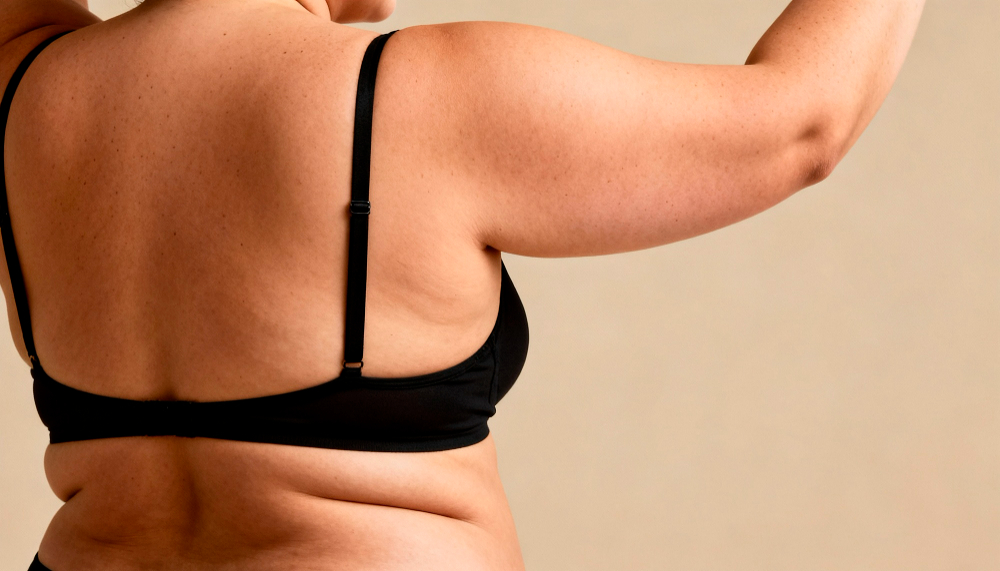
Why does stubborn back fat remain even after regular exercise and healthier eating? For some people, it appears around the bra line, while for others, it appears across the upper or lower back. These areas can be slow to change because genetics, hormones, age, and overall body composition all affect how the body stores and loses fat.
This blog explains what may contribute to stubborn back fat, why spot reduction does not work, and which lifestyle changes and non-surgical body contouring options may help.
What is Back Fat?
Back fat is the extra fat that can accumulate in various areas of the back. The location can vary from person to person, and some areas may be more noticeable than others.
Upper back fat may appear around the shoulders and upper back. It can become more noticeable in sleeveless tops or clothing that fits closely around the upper body.
Bra fat, also known as a bra bulge, usually refers to the fat that appears around the sides and back near the bra band. Many women notice this area more when wearing fitted clothing.
Mid-back fat develops around the middle of the back and may form visible folds, especially when sitting or bending.
Lower back fat usually appears near the waist and may extend toward the sides of the hips. This area is sometimes linked with what people commonly call love handles.
Since fat can collect in different areas, the best approach may vary from person to person. Understanding where the fat is located can help when considering lifestyle changes or treatments aimed at improving body shape.
Why is Back Fat So Hard to Lose?
Back fat can be difficult to reduce because the body does not lose fat from every area at the same rate. Genetics play a major role in this process. Some people naturally store more fat around the back, while others may notice it more around the stomach, hips, or thighs.
Hormonal changes can also affect where fat is stored. Changes in hormones such as estrogen, insulin, and cortisol may influence body composition. This can be especially noticeable during certain stages of life, including menopause.
Age and muscle loss may also change the way the body looks. When muscle mass decreases, the overlying skin and fat may appear less firm. A lack of regular movement can contribute to this change over time.
Posture can also affect the appearance of back fat. Slouching may create folds or make certain areas look fuller, especially when sitting. Strengthening the back and core may help improve posture, but exercise alone cannot determine where the body loses fat first.
When the body loses fat, it decides where to draw energy from. This means the back may change more slowly than other areas, even with regular exercise and healthy eating. Because of this, some people may continue to notice small, localized areas of fat after making lifestyle changes.
Can You Spot Reduce Back Fat?
Many people wonder whether doing more back exercises can reduce back fat on its own. Unfortunately, the body does not choose one specific area to burn fat from during exercise. So, doing extra back exercises does not necessarily mean fat will disappear from the back first.
When the body uses stored fat for energy, fat can be lost from different areas. The order can vary from person to person and may be influenced by factors such as genetics, hormones, and overall body composition. This is why some people may notice changes in their waist or face before seeing much difference in their back.
Back exercises are still useful. Moves such as rows and pull-downs can strengthen the back muscles, which may support better posture and a more defined appearance as overall body fat decreases. However, these exercises do not directly remove the fat covering that area.
Best Ways to Get Rid of Stubborn Back Fat
Reducing back fat usually requires more than focusing on a single exercise or making a short-term change to the diet. Since the body loses fat from different areas at different rates, a combination of healthy eating, regular movement, and strength training may support overall fat loss and changes in body composition.
Create a Moderate Calorie Deficit
Fat loss generally happens when the body uses more energy than it gets from food. A moderate calorie deficit may support steady progress without the extreme hunger and low energy that can come with overly restrictive diets. Tracking meals for a short time may also help identify eating habits that are easy to overlook.
Include Enough Protein
Protein can help support muscle while the body loses fat and may also help meals feel more filling. Foods such as chicken, fish, eggs, Greek yogurt, tofu, and beans can make it easier to include protein in regular meals. The right amount depends on factors such as body size, activity level, and overall health.
Add Strength Training
Strength training can help build the muscles beneath the back and improve overall body composition. Exercises such as rows, lat pulldowns, face pulls, and reverse flyes work different areas of the back and may help improve muscle definition and posture over time.
Include Regular Cardio
Walking, cycling, swimming, and other forms of cardio can increase daily calorie use and support overall fat loss. There is no single best type of cardio for everyone. The most useful option is usually one that can be done regularly and fits comfortably into daily life.
Move More Throughout the Day
Daily movement also matters outside of planned workouts. Taking short walking breaks, using the stairs, standing during parts of the workday, or walking while taking phone calls can add more activity to the day.
Get Enough Sleep and Manage Stress
Sleep and stress can also affect eating habits, energy levels, and weight management. Poor sleep may increase hunger and cravings, while ongoing stress may make it harder to maintain healthy routines. Getting enough sleep and making time for relaxing activities may support a more consistent approach to fat loss.
ALSO READ: How to Get Rid of Stubborn Arm Fat
What are the Best Exercises for Back Fat?
While spot reduction is not possible, strengthening the back muscles can create definition and improve the area’s overall appearance.
- Upper back exercises include face pulls, band pull-aparts, and rear delt flyes. These movements target the muscles between the shoulder blades and help improve posture.
- Lower back exercises such as supermans, back extensions, and good mornings strengthen the erector muscles that run along the spine.
- Core exercises support the entire trunk and improve posture, which affects how the back looks. Planks, dead bugs, and pallof presses all engage the core while protecting the spine.
- Shoulder exercises like lateral raises and overhead presses contribute to a more balanced upper-body appearance, which can minimize the appearance of back fat.
What are the Foods That May Support Fat Loss?
Nutrition plays a central role in any fat loss effort. Certain food choices can make the process easier by promoting fullness, supporting muscle retention, and providing sustained energy.
1. Protein-rich foods should form the foundation of most meals. Lean meats, fish, eggs, dairy, legumes, and plant-based proteins all help preserve muscle mass during fat loss.
2. Fiber from vegetables, fruits, whole grains, and legumes promotes satiety and supports digestive health. High-fiber foods tend to be filling without being calorie-dense.
3. Healthy fats from sources like avocados, nuts, olive oil, and fatty fish provide essential nutrients and help with hormone production. Despite being calorie-dense, these fats can support fat loss when consumed in appropriate amounts.
4. Complex carbohydrates from whole grains, sweet potatoes, and legumes provide sustained energy for workouts and daily activities without causing the blood sugar spikes associated with refined carbs.
5. Adequate hydration supports metabolism and can reduce hunger that sometimes masquerades as thirst. Water remains the best choice, though unsweetened tea and coffee can also contribute.
6. Foods worth limiting include highly processed items, sugary beverages, excessive alcohol, and foods high in refined carbohydrates. These tend to be calorie-dense while providing little nutritional value or satiety.
Why Some Back Fat Does Not Go Away
Here is something important to understand. Even after losing twenty or thirty pounds, exercising consistently, and eating healthfully, some people find that localized fat deposits remain stubbornly in place.
This happens because fat distribution is largely determined by genetics. The body has certain areas where it prefers to store fat, and these areas are often the last to release it. For some people, the back is one of those stubborn zones.
Hormonal factors can also cause fat to remain in specific areas even when overall body composition improves. This does not mean something is wrong. It simply reflects the complex interplay between genetics, hormones, and individual physiology.
When lifestyle changes have produced significant results elsewhere, but certain areas remain resistant, many people begin exploring professional body-contouring options to complement their healthy habits.
Which Treatment Is Best for Back Fat?
The right treatment may depend on the type of concern, the amount of localized fat, and whether loose skin or skin texture is also a concern. Each treatment works differently, so one option may be more suitable than another.
| Goal | Treatment Option |
| Small localized fat pockets | Laser lipo |
| Pinchable fat deposits | CoolSculpting |
| Loose or less firm skin | RF Skin Tightening |
| Fat and skin laxity concerns | Venus Versa |
| Overall body shaping | Body Contouring |
| Post-treatment support | Lymphatic Drainage |
Body Contouring
Body contouring encompasses various treatments designed to reshape and refine specific body areas. These procedures typically work by targeting fat cells directly while leaving surrounding tissue unaffected. Ideal candidates are generally close to their goal weight but have localized fat deposits they wish to address. Benefits may include improved body proportions, smoother contours, and enhanced confidence.
Laser Lipo
Laser lipo uses laser energy to disrupt fat cells, which the body then processes and eliminates naturally over time. This treatment tends to work well for small to moderate fat deposits and generally involves minimal recovery time. Results typically develop gradually as the body clears the disrupted fat cells.
Ultrasonic Cavitation
Ultrasonic cavitation employs ultrasound technology to break down fat cells in targeted areas. The procedure uses low-frequency sound waves to create pressure changes that may cause fat cell membranes to break down. This treatment often appeals to those seeking a gentler approach to fat reduction.
CoolSculpting Fat Freezing
CoolSculpting uses controlled cooling to freeze fat cells, which then die and are gradually eliminated by the body. This FDA-cleared treatment tends to work well for pinchable fat deposits. Results typically become visible over several weeks to months as the body processes the treated fat cells.
Venus Versa
Venus Versa combines multiple technologies to address both skin texture and body contours. This treatment may help tighten skin while improving overall appearance, making it particularly useful for those concerned about both fat and skin quality.
Radio Frequency Skin Tightening
RF skin tightening uses radiofrequency energy to heat the deeper layers of skin, which may stimulate collagen production and improve skin firmness. This treatment can be especially valuable when loose skin accompanies fat loss, helping create smoother, firmer-looking results.
Lymphatic Drainage
Lymphatic drainage massage may complement body contouring treatments by reducing temporary swelling and supporting the body’s natural elimination processes. Many practitioners recommend it as part of a comprehensive treatment plan.
If comparing different options, a guide on body sculpting treatments can help explain how popular treatments compare and who they tend to suit best.
How Long Does It Take to See Stubborn Back Fat Results?
Timelines vary based on the approach taken. Lifestyle changes like improved nutrition and regular exercise typically show results within weeks to months, though individual experiences vary widely.
Professional treatments have their own timelines. Some may show initial results within a few weeks, while others require several months for full effects to develop. Most treatments require multiple sessions for optimal results, with the number varying based on individual factors and treatment type.
Consistency matters tremendously regardless of the approach. Sustainable habits practiced over time tend to produce better long-term results than aggressive short-term efforts.
Why Do Clients Choose Skylight Beauty Spa?
At Skylight Beauty Spa, body-contouring plans are tailored to each client’s concerns and goals. The spa offers several non-surgical treatments that may help address localized fat and skin concerns, including CoolSculpting, laser lipo, ultrasonic cavitation, Venus Versa, radio frequency skin tightening, and lymphatic drainage.
Each treatment works differently, so the right option may depend on the area being treated, the amount of localized fat, skin firmness, and the results a client hopes to achieve. During a consultation, the team can discuss the available treatments, explain what each option may address, and set realistic expectations about the process and possible outcomes.
For clients who have already worked on their overall health and still notice stubborn fat around areas such as the bra line, upper back, or lower back, these treatments may offer another option to consider. The focus remains on creating a treatment plan that suits the individual rather than recommending the same approach for everyone.
Conclusion
Reducing stubborn back fat requires patience, consistency, and a comprehensive approach. Healthy eating habits, regular strength training, cardiovascular exercise, and lifestyle factors like sleep and stress management all contribute to overall fat loss that eventually includes the back.
However, genetics and hormones sometimes cause fat to remain in certain areas despite best efforts. For those who have established healthy habits but still struggle with stubborn areas, professional body-contouring treatments may offer additional refinement options.
Call Skylight Beauty Spa at (347) 998-4343 to schedule a consultation and learn which body-contouring treatment best suits your goals.
FAQs
Why is back fat so stubborn?
Back fat tends to be stubborn because genetics largely determine where the body stores and releases fat. Some people are simply predisposed to carry fat in their back region, making it one of the last areas to show change during overall fat loss.
Can walking reduce back fat?
Walking may contribute to overall fat loss by burning calories and creating an energy deficit. While it will not specifically target back fat, regular walking as part of a comprehensive lifestyle approach can help reduce total body fat, which includes the back.
How to lose back fat?
Generally, reducing back fat requires some degree of overall fat loss. However, building back muscles through strength training can improve the appearance of the area even without significant weight change by creating definition and improving posture.
Does CoolSculpting work on back fat?
CoolSculpting has been used to treat various areas including the back. It may be effective for pinchable fat deposits in this region, though results vary based on individual factors and the amount of fat present.
What causes bra bulge?
Bra bulge typically results from a combination of fat deposits around the upper and mid-back along with the compression created by bra bands. Genetics, overall body fat percentage, and bra fit all play roles.
Is laser lipo effective for back fat?
Laser lipo may help reduce small to moderate fat deposits in the back region. Results tend to develop gradually and are typically best for those already close to their goal weight.
How long does body contouring take?
Individual treatment sessions typically range from thirty minutes to an hour depending on the treatment type and area being addressed. Most people require multiple sessions spaced over several weeks or months for optimal results.
Can RF tighten loose back skin?
Radiofrequency treatments may help improve skin firmness by stimulating collagen production. Results can vary based on skin quality, age, and individual response to treatment.